
Founder’s Note

Across our work with climate, health, livelihoods, financial inclusion, and other pressing challenges, we have come to recognize a humbling truth: complexity cannot be solved; it can only be navigated. 

Most of the problems facing our societies today are not static puzzles. They are deep, rooted, and highly interconnected systems—constantly evolving, often accelerating. Their impacts unfold exponentially, but unevenly. And it is always the communities closest to the frontline who feel these shifts most viscerally. 

A smallholder farmer does not experience climate change as an abstract trend line. A shift in rainfall or temperature reshapes everything—cropping cycles, growth, yield, price, and ultimately, survival. Their exposure is immediate and existential, while the resources to act are distant, centralized, or fragmented. 

The Double Exponential Gap 

In observing these systems, we see a phenomenon we call the Double Exponential Gap. 

The first exponential is the accelerating nature of the problem itself—the way climate volatility, health crises, or livelihood shocks compound over time. 

The second exponential is the widening distance from resources. A few actors hold vast institutional capability, while millions navigating these crises have very little. This creates what we call the C-Curve: a steep, unequal distribution where those with the deepest context lack resources, and those with resources lack context. 

This split produces a profound Collective Wisdom Gap—both horizontal and vertical. Horizontally, local insights rarely flow across communities facing similar struggles. Vertically, the “top” lacks granular sensing, and the “bottom” lacks access to institutional knowledge. 

When the problems of our time grow exponentially, wisdom cannot remain fragmented. 

From Uniform to Unified 

For too long, “scale” has meant a top-down template—a uniform solution rolled out everywhere. While sometimes necessary, this approach struggles in hyper-local contexts where nuance determines success. 

At Apurva, we are asking a different question:
Can scale emerge from the bottom up? 

What if scale was not imposed, but grown?
What if communities were the first mile of insight, not the last mile of implementation? What if many local, context-rich responses could be connected so that a unified pattern emerges—one that is not uniform, but coherent? 

This shift—from Uniform Scale to Unified Scale—requires a renewed commitment to three pillars: 

Listen:
To truly hear communities, NGOs, field teams, and frontline actors—not as data points, but as partners in sensing complexity. 


Learn:
To enable circular flows of wisdom—peer-to-peer learning, bottom-up insight for funders, and the translation of institutional knowledge into contextual practice. 


Act:
To enable the ecosystem to respond collectively, with interventions that are as local as the problem they seek to address and as connected as the systems they inhabit. 

The Promise of Apurva 

Apurva was built as an architecture for this kind of response. 

A suite of product building blocks powered by exponential technologies. Platforms that strengthen interactions and network effects. Protocols that enable shared discovery, interconnected learning, and emergent intelligence. 

In other words: tools designed not to simplify complexity, but to work with it, mirroring the systems they serve. 

We believe the future of solving complex problems lies in unlocking local collective wisdom and enabling ecosystems to act together—rooted in context, connected at scale. 

We invite change-makers, funders, and institutions to join us in building this unified, bottom-up architecture of response. Because the challenges ahead are too complex for any one actor—and too urgent for us to remain disconnected. 

— Anand 

Share this post

For more than 30 years, Museu da Pessoa in Brazil has been listening to people tell their stories.

Founded in São Paulo in 1991, it is one of the world’s earliest virtual and collaborative museums and has built an archive of more than 21,000 life stories. The collection brings together experiences of common people from across Brazil, including Indigenous and traditional communities, leaders and participants in environmental, social, and cultural movements, and conversations around gender, race, labour, and technology, alongside stories of everyday life.

Behind each of these stories is something more: knowledge shaped by lived experience. “Behind every individual life and every collective experience, there is a unique form of knowledge,” says Lucas Lara, Content Director at Museu da Pessoa.

The challenge for the museum has been finding new ways to make sense of this knowledge across a large and growing archive.

Over the past few months, Museu da Pessoa and Apurva.ai have been exploring this together. Using Apurva LENS, the team designed a pilot around a subset of voices from the archive, looking specifically at experiences around caring and longevity.

The pilot explored whether technology could help identify patterns, differences and connections across individual narratives while retaining the context of the stories themselves. This aligns with Apurva LENS’s broader approach of connecting fragmented knowledge and community voices while keeping insights traceable to their sources. 

According to Lucas, the pilot was able to engage with both the content and subjective nature of the narratives, identify relevant excerpts, generate reports, surface gaps and connect knowledge across different stories to support analysis.

For Museu da Pessoa, this opens up the possibility of eventually exploring a much larger part of its archive in this way.
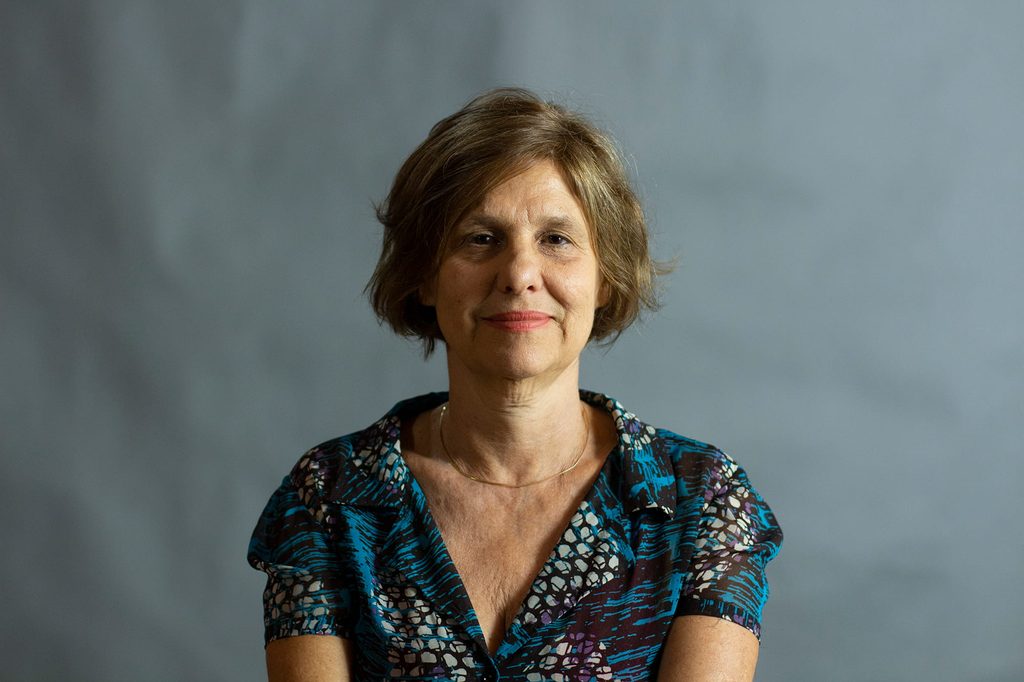
Karen Worcman, Founder and President of Museu da Pessoa, describes the shared belief behind the collaboration simply: “We do believe that listening is the first step for change and Apurva.ai will be an important step for creating change in the Global South.”

The work is still at an early stage. But it points to an interesting possibility: making it easier to learn from thousands of individual experiences while keeping the people, places and contexts behind those experiences visible. As Lucas puts it, “Behind every story there is knowledge.”

Continue Your Journey

Discover more insights and tools that empower communities to drive meaningful change.

Previous