


Can you recall the last time the word “Gravity” crossed your mind? Perhaps it was a long time ago, maybe during a thrilling skydiving experience or while witnessing an object descend from the sky. For some, it could be a memory from school days.
Although we may not consciously think about gravity every day, it silently pervades our environment. It shapes our lives, influences planetary movements, and shapes space-time itself.
Collective Intelligence is like gravity—a subtle yet ever-present force that shapes our lives and decision-making. It arises spontaneously when individuals harmoniously work towards a shared goal or purpose. This collaboration generates a powerful synergy, enhancing the group’s effectiveness and unlocking their collective creativity.
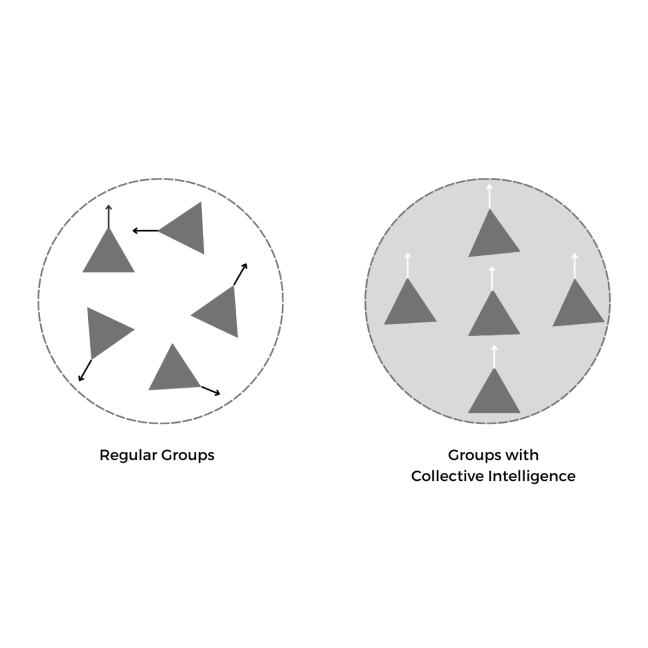
A team of medical professionals collaborating to save a patient’s life, a community uniting to rebuild after a natural disaster, or coworkers brainstorming innovative ideas for a new program—these are all examples of collective intelligence. And it’s not limited to humans alone. Bees, for instance, communicate the location of nectar through a waggle dance, fish swarm to evade predators, birds fly together to minimize drag, and trees in a forest communicate about pest attacks.
While collective intelligence arises from collaboration within a shared expertise, we define Collective Wisdom as an emergence that occurs when individuals or groups from different segments of the society come together to solve a complex systems problem.

Each group brings an unique understanding of certain aspects of the problem, and when we combine these diverse perspectives, we gain a more comprehensive understanding of the broader system that we can’t achieve alone.
Further, we see groups organized under 3 distinct network types: Centralized, Distributed, and Localized.
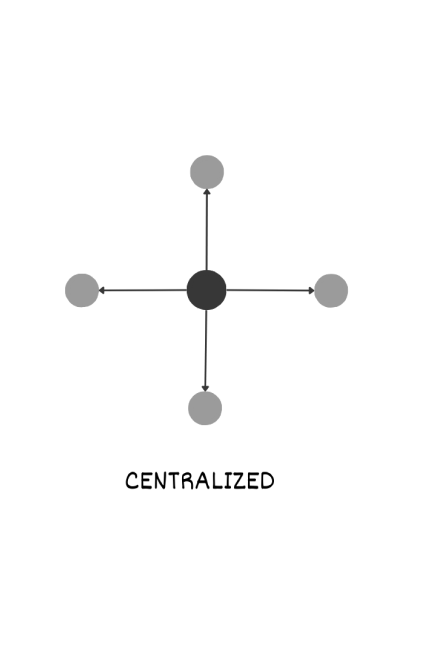
Centralized networks typically follow a hierarchical structure where there is a central authority that controls and coordinates the overall interactions within the group. This type of network can be found in Government, Non-Profits, and the Private Sector. Such networks are also prevalent in Knowledge Institutions.

Distributed networks, on the other hand, are often more balanced and have a peer-to-peer relationship among participants. These networks usually prioritize sharing and learning with each other, rather than relying on a central authority.

Localized networks are more contextual and informal but tend to be denser in terms of connections and interactions. These networks are commonly observed in communities, where participants collaborate and share knowledge and resources with each other, not always relying on a central authority to organize or coordinate their activities.

An ecosystem and its collective wisdom emerges when knowledge flows across such diverse networks.

Collective wisdom, though observable, is a transient phenomenon that exists only as long as sustained interactions between individuals or groups occur. This raises important questions about its continuity and growth:
How can collective wisdom endure beyond these interactions? How can it benefit those who have not participated in the interaction? How can it be nurtured to mature and evolve? And how can it be effectively shared across diverse languages and contexts, transforming into a public good?
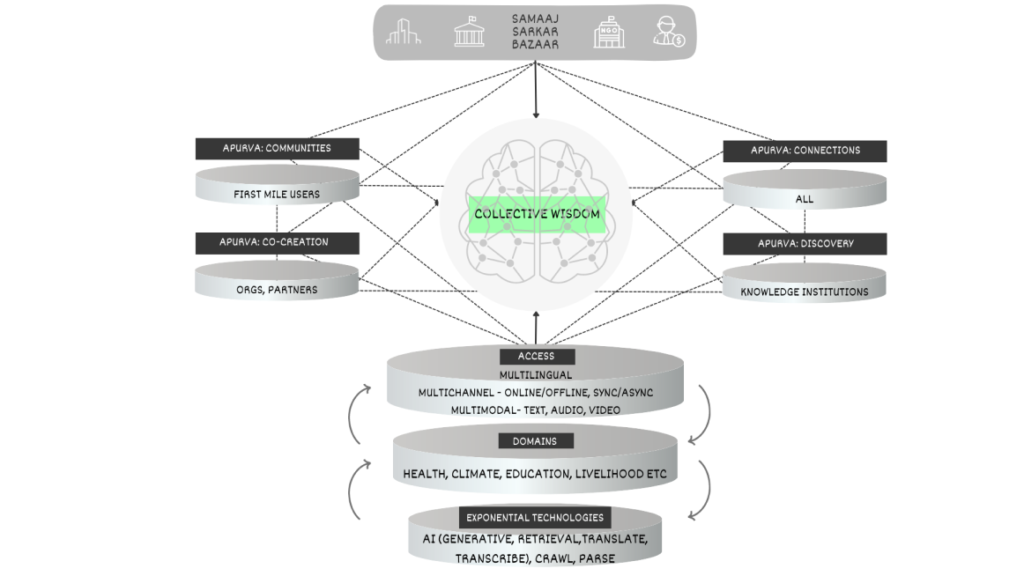
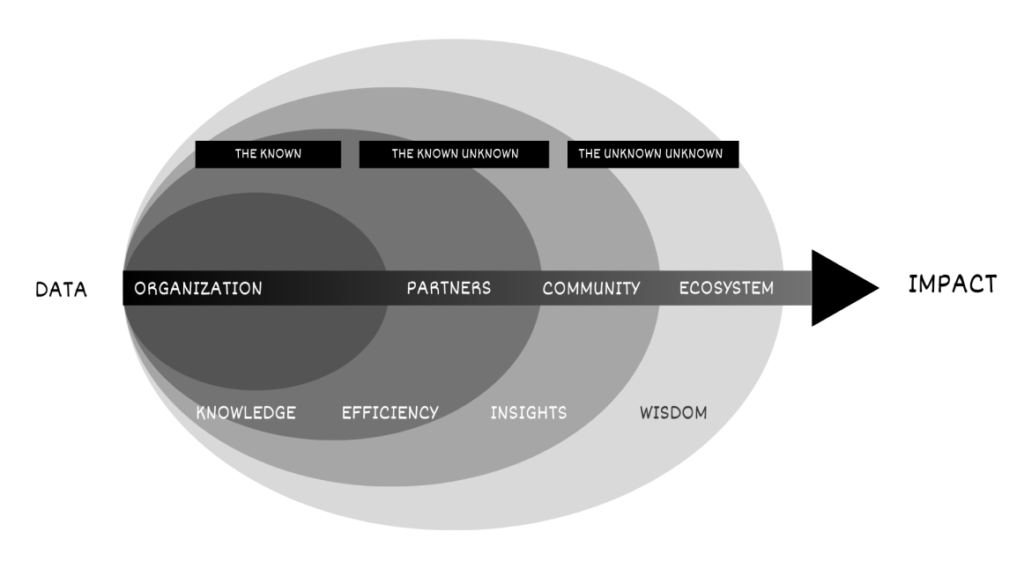
This pursuit has led us to conceive Apurva.ai, an Open Innovation Platform for Collective Wisdom. Apurva, a digital brain, serves as a dynamic representation of the collective wisdom of a network, continually growing with every interaction. Apurva encompasses diverse knowledge sources from organizations, partners, and communities, supporting various formats including text, voice, and video. Apurva seamlessly operates across multiple languages, making this wealth of knowledge easily accessible through mobile and web platforms, enabling users to interact in their preferred language.
Apurva enhances the quality of interaction within a group and facilitates connection and exchange of knowledge across multiple groups, thereby enabling a more comprehensive understanding of the overall system.
To amplify the collective wisdom of an ecosystem, an environment of trust, respect, openness, and shared commitment to co-create is crucial. While Apurva can enable this journey, the real power lies with the people who come together to solve complex problems with a deep sense of agency.