


The development sector works to improve the well-being and quality of life of communities, promotes environmental sustainability and fosters public policy and advocacy. The process of development follows the lives of people, their problems and designing solutions for these complex problems. Coming from a development background, I recognise the importance of discussions and dialogues in the sector as the preliminary phases of solving problems greatly involve a deep dive into understanding the problem through a series of discussions and consultations. These interactions could be with any stakeholders of the society – community, institutions or government. However, never did I imagine that a technology like AI could be an integral part of these human conversations and hold the capability to reimagine the process of development.
I recall the day I witnessed Apurva’s ‘Power of Co-creation’ for the first time in a live conversation and I was amazed at its capability of being an equally active participant in the conversation. Based on the ongoing discussion, Apurva emerged with insights and perspectives during the conversation, many of which even the participants of the conversation could not think of (Fig 1). Not only were the insights and perspectives useful to deep dive into the conversation, but the questions emerging alongside the conversation were thought-provoking guiding further deep thinking. The outcome of the entire conversation, packaged along with ‘out of the box’ thinking and deep diving into problems and scenarios made me realise how unique Apurva was. It was indeed an ‘AHA moment’ for me to imagine Apurva being a part of such conversations in the development sector and leveraging the wisdom to solve problems.
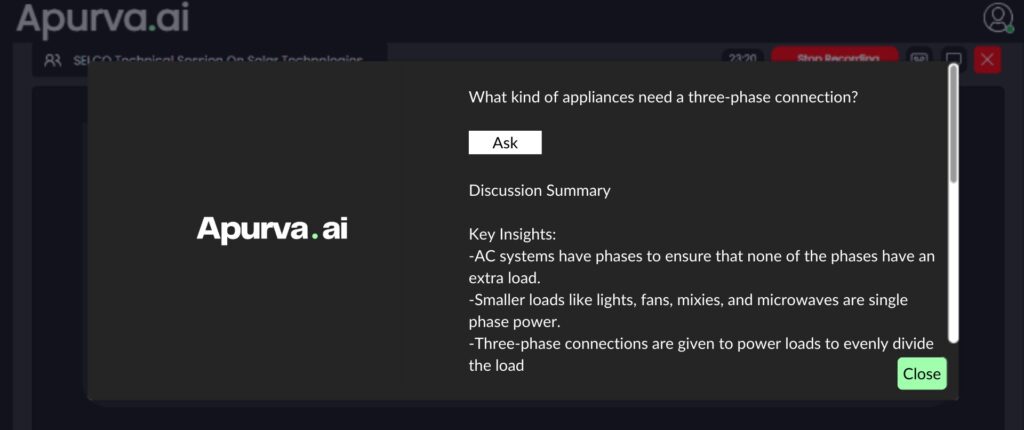
Fig 1: Key Insights and Probing Questions during a Co-create Session
My AHA moments were also shared by many others in our network. Talking about this, Rachita Misra, Associate Director, Knowledge and Advocacy, SELCO Foundation, explained how Apurva sits as an equal participant during co-creation by offering insights and perspectives that are sometimes not thought of even by the participants present in the conversations. These insights and perspectives promptly lead to important points that participants can further ponder on, in understanding the problem better. She shared how Apurva’s Power of Co-creation has been helping their organisation to deep dive into understanding the problem thereby easing the process of designing for solving.
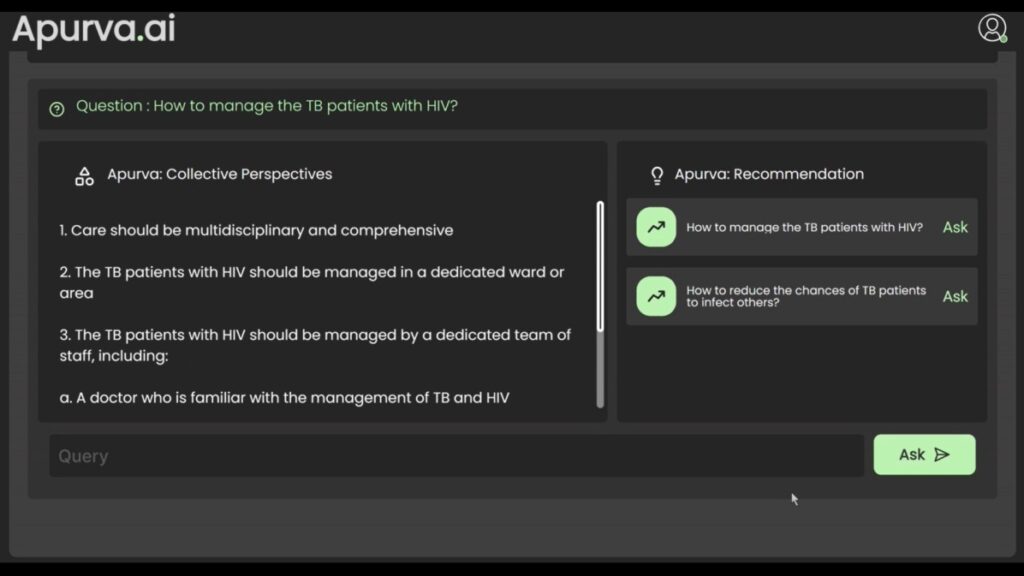
Fig 2: Querying & Key Perspectives and Other Probing Questions during a Co-Create Session
The beauty and importance of co-creation will be better recognised by knowledge curators and heads of organisations. By co-creating, one could leverage the various pieces of knowledge that emerge from collaborations and conversations, leading to learnings across different departments, stakeholders and networks. This not only aids in guiding designing programs, modifying workflows and decision making but it also holds the potential to positively impact the organisation’s work and implementations in the long run.
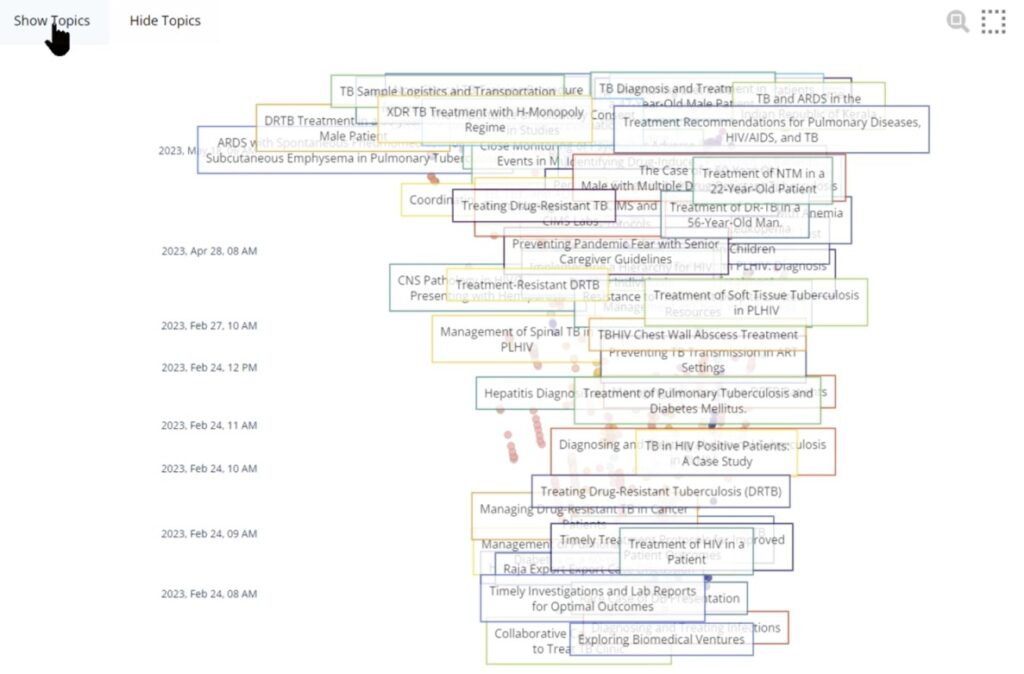
Fig 3: Time series and Topics
Approaches to development mostly rely on knowledge sharing, discussions, interactions, workshops and many more forms of communication. While the discussions and conversations in various departments and various domains continuously happen, it is extremely crucial to deep dive into the content and context of these discussions so as to minimise the reinvention of the wheel around the complex problems. An organisation can link the dots by zooming in and out of conversations within the organisation. This will promote cross-learning and reduce the learning curve at numerous ends. Looking at the various emerging themes within and outside one’s network, it can help an organisation to prioritise their work areas, the problems that need to be prioritised and focus on collaborations for interventions with their networks. So many interesting opportunities that can be explored under the umbrella of Apurva’s Power of Co-creation.
It is inspiring to witness how simple conversations in passionate organisations like SELCO Foundation, ProjectECHO and Catalysts Group can be a game changer when leveraged with co-creation and collective wisdom across departments, geographies and networks!